
Preventing trading card damage: A Complete Guide
Table of Contents
- Why Protecting Your Trading Cards Matters
- Best Sleeves for Trading Cards: Your First Line of DefenceSingle Sleeves vs Double SleevesMaterials and Thickness to Look For
- How to Store Trading Cards SafelyTemperature and Humidity ControlChoosing the Right Location
- How to Prevent Cards from WarpingMoisture and Environmental FactorsWeight Distribution and Stacking
- Trading Card Binder vs Storage Box: Which Is Right for YouWhen to Use BindersWhen to Use Storage Boxes
- Handling Your Cards CorrectlyClean Hands and Dry ConditionsSupporting Cards Properly
- Common Mistakes That Damage Trading Cards
- Frequently Asked Questions
Last Updated: October 5, 2026
Why Protecting Your Trading Cards Matters
Your trading card collection represents more than just cardboard and ink. Whether you're chasing rare Pokémon cards, football trading cards, or the latest gaming releases, these items hold real value, both financially and sentimentally. A single card in pristine condition can be worth hundreds of pounds. The same card, damaged, might fetch a fraction of that.
Damage happens quickly. A bent corner. A water stain. A crease from improper storage. Once it's done, it's permanent. That's why learning how preventing trading card damage matters from day one, not after you've already lost cards to careless handling or poor storage conditions.
The good news is that protecting your cards doesn't require expensive equipment or complicated processes. It requires the right approach, the right materials, and consistency. Below, we'll show you exactly how to safeguard your collection so your cards stay in the condition you want them in.
Best Sleeves for Trading Cards: Your First Line of Defence
The single most important step in protecting your trading cards is getting them into proper sleeves. A sleeve is your card's first barrier against dust, moisture, fingerprints, and accidental bending.
Not all sleeves are equal, though. The material, thickness, and fit all matter.
Single Sleeves vs Double Sleeves
Single sleeves are the standard protection layer. They fit snugly around one card and slide into binders or storage boxes. For most collectors, single sleeves are sufficient for everyday storage and display.
Double sleeves add a second layer of protection. You place the card in a single sleeve first, then slide that sleeved card into a larger outer sleeve. This creates a protective pocket that guards against moisture and physical damage. Double sleeves are worth the extra cost and effort if you're storing high-value cards or cards you plan to keep for decades.
The choice depends on your cards' value and your storage method. Budget cards in a casual collection? Single sleeves work fine. Rare or expensive cards? Double sleeves give you peace of mind.
Materials and Thickness to Look For
Look for sleeves made from polypropylene or PVC-free materials. Polypropylene is the industry standard because it's durable, doesn't degrade over time, and won't damage your cards chemically.
Avoid old PVC sleeves if you find them. PVC can break down and leave sticky residue on your cards. It's not worth the risk.
Check the sleeve thickness when you buy. Thicker sleeves (around 100 microns) offer better protection than thin ones. They resist tearing and provide sturdier support for your cards.
When sourcing sleeves, look for packs that specify they're acid-free and non-yellowing. These details matter for long-term storage. Your sleeves should protect your cards, not damage them over years of storage.
How to Store Trading Cards Safely
Sleeves are just the start. Where and how you store your cards matters just as much as what you store them in.
Temperature and Humidity Control
Trading cards are made from paper and cardboard. Paper responds to moisture and temperature swings. High humidity causes cards to absorb water, which leads to warping and swelling. Low humidity makes cards brittle and prone to cracking.
The ideal storage environment stays between 40-50% relative humidity and 18-21°C.
In practice, most homes don't maintain perfect conditions. That's okay. The key is avoiding extremes. Don't store cards in damp basements, steamy bathrooms, or unheated attics. These environments fluctuate wildly and will damage your collection.
A cool, dry cupboard or wardrobe in your main living space works well. Temperature and humidity stay relatively stable indoors. Avoid direct sunlight, which fades card colours over time.
Choosing the Right Location
Pick a storage location that's:
- Away from windows and direct sunlight
- Not above radiators or heating pipes
- Not in kitchens or bathrooms where moisture is high
- Elevated off the floor (in case of flooding or spills)
- Cool and dark
A bedroom wardrobe, bookshelf in a living room, or under-bed storage box all work. The point is keeping your cards away from temperature swings, moisture, and light damage.
Avoid storing cards in garages, sheds, or lofts. These spaces experience wild temperature and humidity changes that will warp your cards over months.
How to Prevent Cards from Warping
Warping is one of the most common forms of trading card damage. A warped card looks unnatural, won't fit properly in sleeves, and loses value instantly.
Moisture and Environmental Factors
Moisture is the primary cause of warping. When cardboard absorbs water, it swells unevenly. As it dries, it warps and stays bent. This happens even if you dry the card afterwards.
Keep your cards away from:
- Spilled drinks and water
- High-humidity rooms
- Damp storage areas
- Condensation from temperature changes
If a card does get wet, the damage is usually permanent. Prevention is far easier than trying to fix a warped card.
Store cards in sealed containers if your home tends toward dampness. Airtight storage boxes with tight-fitting lids protect against moisture infiltration.
Weight Distribution and Stacking
How you stack your cards matters. Heavy weight pressing down on cards causes permanent bending and warping.
Never stack loose cards in tall piles. The weight of cards on top crushes the ones below, creating permanent bends.
Instead:
- Store cards upright in boxes or binders, not flat
- If you stack sleeved cards, keep stacks to 50 cards maximum
- Use dividers to separate sections and distribute weight evenly
- Store valuable cards horizontally in card savers (small plastic holders) rather than stacking them
Upright storage also makes it easier to flip through your collection without handling every card. Less handling means less risk of damage.
Trading Card Binder vs Storage Box: Which Is Right for You
Both binders and storage boxes protect your cards. The choice depends on how you want to use your collection.
Waterproof Wet Nappy Bag with Drawstring Closure →
When to Use Binders
Binders are ideal if you want to display and review your cards regularly. They let you flip through your collection easily without handling individual cards excessively.
Choose binders with:
- Thick, sturdy covers
- Side-loading pages (cards slide in from the side, not the top)
- Acid-free materials
- Tight-fitting pages that hold cards securely
Side-loading pages are crucial. Top-loading pages let cards slide out when you open the binder, risking drops and bends.
Binders work best for cards you enjoy looking at frequently. They're not ideal for long-term storage of high-value cards because the constant opening and closing creates wear.
When to Use Storage Boxes
Storage boxes are better for cards you're storing long-term or cards you're not displaying regularly. They stack neatly, take up less space, and create a sealed environment that protects against dust and moisture.
Choose boxes that are:
- Made from acid-free cardboard
- Sized appropriately for your cards
- Sturdy enough to stack without crushing
- Fitted with tight-closing lids
Storage boxes work brilliantly for bulk collections or valuable cards you're keeping safe. You can label boxes by set, year, or value, making it easy to find specific cards later.
For most collectors, the best approach combines both. Use a binder for your favourite cards or the ones you display. Use storage boxes for the rest of your collection.
Handling Your Cards Correctly
How you touch your cards matters as much as where you store them. Careless handling damages cards in seconds.
Clean Hands and Dry Conditions
Always wash and dry your hands before handling cards. Oils, moisture, and dirt on your fingers transfer to card surfaces, leaving permanent marks.
Handle cards only when your hands are completely dry. Damp fingers cause water marks and can soften the card stock. If you've just washed your hands, wait five minutes for them to dry thoroughly.
Wear cotton gloves if you're handling rare or valuable cards. This adds a layer of protection and prevents skin oils from touching the card surface.
Supporting Cards Properly
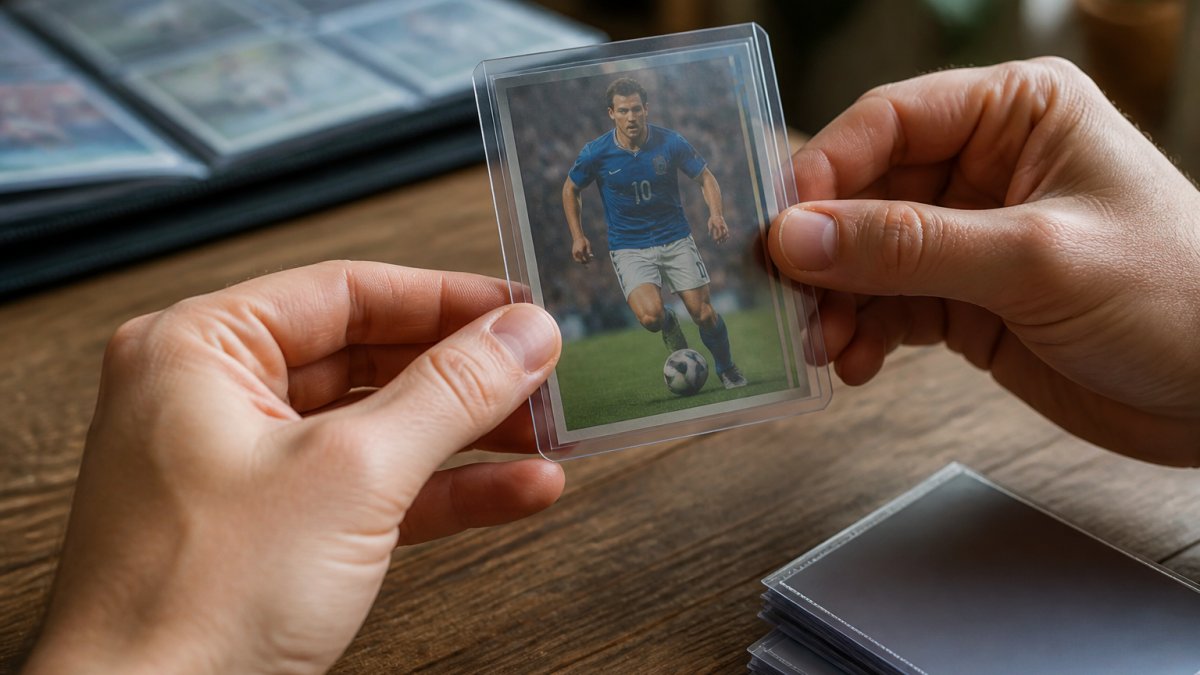
Hold cards by the edges, never the face. Pinching the centre of a card bends it. Pressure on the face leaves fingerprints or dents.
Support the card from underneath with your other hand. Never hold a card by one corner, this creates uneven stress and bending.
When placing a card down, set it gently on a clean, flat surface. Don't slide it across tables or other cards. Friction causes surface damage and wear.
If you're moving cards between sleeves or boxes, do it slowly and carefully. Rushing leads to dropped cards, bent corners, and creases.
Common Mistakes That Damage Trading Cards
Most card damage comes from a handful of preventable mistakes.
Storing cards in the wrong environment. Basements, attics, and garages experience temperature and humidity swings that warp cards. Keep cards in your main living space where conditions stay stable.
Using low-quality sleeves. Cheap sleeves tear easily, don't protect cards properly, and can leave residue on cards. Invest in proper polypropylene sleeves.
Stacking loose cards. Weight crushes cards, creating permanent bends. Always sleeve cards and store them upright.
Handling cards with wet or oily hands. Moisture and oils leave permanent marks. Wash and dry your hands before touching cards.
Exposing cards to direct sunlight. UV light fades card colours and damages the card stock. Store cards away from windows.
Storing cards in plastic bags or poor containers. Thin plastic traps moisture. Use acid-free boxes or binders designed for card storage.
Bending cards to fit them into sleeves. If a card doesn't fit, you've got the wrong size sleeve. Buy the correct size and slide cards in gently.
Protecting your trading card collection is straightforward once you know what matters. Get proper sleeves, store cards in a stable environment, handle them carefully, and check on them occasionally. Your collection will stay in excellent condition for years.
At Earthlets, we stock many trading cards and gaming merchandise with exclusive digital rewards. Our same-day dispatch (Monday to Friday) means your new cards reach you quickly, and our curated selection ensures you're getting the products serious collectors actually want. Whether you're building a new collection or adding to an existing one, we're here to help you find exactly what you're after.
Frequently Asked Questions
How do you stop trading cards from getting damaged?
The most effective way to prevent trading card damage is to use protective sleeves immediately, store cards in a cool, dry place between 18-24°C, and handle them with clean, dry hands. Keep cards away from direct sunlight, moisture, and extreme temperature changes. Store them upright in boxes or binders rather than flat stacks, which can cause warping and pressure damage over time.
What is the safest way to store trading cards?
Store trading cards in acid-free sleeves inside a storage box or binder kept in a climate-controlled environment. Maintain humidity levels between 30-50%. Keep the storage location away from windows, radiators, and damp areas like bathrooms.
Should you put trading cards in sleeves straight away?
Yes, you should sleeve trading cards as soon as possible after purchase, especially if they're valuable or part of a collection you want to preserve. Sleeves protect against dust, fingerprints, moisture, and physical bending. Even casual collectors benefit from immediate sleeving because damage can occur quickly through normal handling and environmental exposure. It's much easier to sleeve cards preventively than to attempt restoration later.
Can humidity damage trading cards?
Yes, humidity is one of the primary causes of trading card damage. High humidity (above 60%) can cause cards to absorb moisture, leading to warping, swelling, and mould growth. Low humidity (below 30%) can make cards brittle and prone to cracking. Maintaining consistent humidity between 30-50% is essential. Avoid storing cards in basements, attics, or bathrooms where humidity fluctuates significantly.